One of the biggest problems in cannabis branding right now is that everybody is trying to look “right.” Right for retail. Right for the mainstream. Right for trends. And somewhere along the way, a lot of brands lose their personality.
You can feel it walking into dispensaries now. Everything starts blending together. Minimal packaging. Soft colors. Corporate wellness aesthetics. Generic “premium” branding. Overdesigned AI artwork. Everybody trying to look polished enough to fit into the same visual conversation.
And honestly, most of it becomes forgettable.
The brands people actually remember usually are not the ones trying to appeal to everybody. They’re the ones that feel authentic to themselves and the community around them. They feel lived in. They feel connected to culture. They feel like there are real people behind them instead of a branding committee trying to manufacture coolness from the outside.
That’s really the biggest thing cannabis brands get wrong. They focus too heavily on the product itself instead of building a world around it.
The strongest cannabis brands today feel more like lifestyle brands than product companies.
People don’t just buy the flower or the edible. They buy into the vibe around it. The packaging. The storytelling. The personality. The feeling of belonging to something bigger than just THC percentages and strain names.
That emotional connection matters way more than most brands realize.
Some of the best projects we’ve worked on were successful because they leaned hard into storytelling and cohesion instead of trying to chase trends.
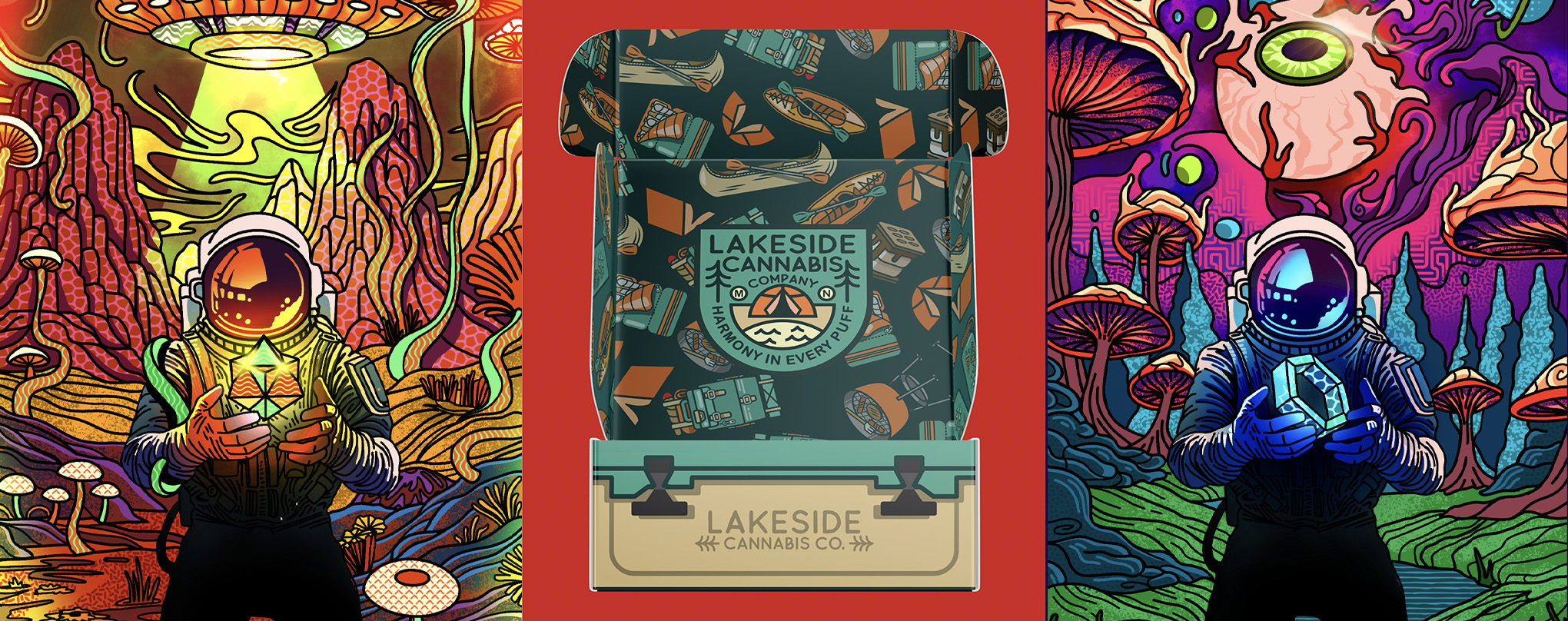
With Lakeside Cannabis Co., the goal was never just making cool packaging. We built an entire ecosystem around nostalgic Midwest camping culture. The products feel connected to the outdoors, summer weekends, old tackle boxes, campfires, and that relaxed up-north energy people around here instantly recognize.
The pre-rolls, flower, blunts, disposables, and cartridges all feel like they belong to the same world while still having enough personality to stand on their own. That consistency matters because customers start recognizing the brand immediately, even before reading the name. That’s where strong packaging becomes bigger than just decoration.
It creates familiarity. Recognition. Community.
We approached Nebula from a completely different angle, but the philosophy stayed the same. Instead of trying to feel polished and corporate, the brand leaned heavily into space exploration, weird flavor storytelling, and bold illustration. The products feel immersive. Like there’s an actual universe behind the packaging instead of random labels slapped onto products.
And with HoneyBee Cannabis, the focus became creating something approachable and lifestyle-oriented without falling into the sterile “modern cannabis wellness” aesthetic everybody started copying. The branding feels warm, intentional, and connected to real people instead of trying too hard to appear luxury.
That’s the difference people feel.
The best cannabis brands are not just selling products anymore. They’re creating identity and culture around the products themselves.
Honestly, cannabis branding today reminds me a lot of what happened in craft beer years ago. Everybody started following the same trends because they looked successful, and eventually the entire industry started looking weirdly similar.
The funny thing is, consumers are actually really good at spotting authenticity. They know when something feels forced. They know when a brand is trying too hard to manufacture culture instead of actually participating in it.
That’s why some of the strongest advice we can give new cannabis brands is honestly just: be yourself.
Build something you actually enjoy.
Build something your community connects with.
Build something that reflects the people behind the brand.
The packaging should amplify the story that already exists, not try to invent one out of thin air.
And that doesn’t mean you need massive budgets or wildly complicated packaging systems either. Some brands benefit from going fully custom with unique packaging structures and specialty materials. Others are smarter starting with more generalized packaging systems that still feel intentional and ownable without blowing their entire budget upfront.
The important part is making sure the brand still feels distinct.
Because nowadays everybody technically has access to decent design tools, AI-generated imagery, and templates. What separates memorable brands now is not access to design. It’s creative direction, storytelling, and understanding how to create emotional connection.
That’s the part people remember.
Not just the product.
The feeling around it.
And in a market that keeps getting more crowded every year, that emotional connection is usually the thing that keeps people coming back.