This is probably one of the most common questions we hear from people looking for creative help.
Should I hire a freelancer?
A design agency?
A marketing company?
A social media person?
A web designer?
And honestly, the answer usually isn’t as black and white as people want it to be.
There are incredible freelancers out there. There are also agencies doing amazing work. We’ve worked alongside both throughout the years, and truthfully, there are situations where either option can make complete sense depending on the stage your brand is in and what kind of support you actually need.
That being said, there’s also a reason so many businesses eventually find themselves frustrated with the creative process altogether.
A lot of brands come to us after spending tens of thousands of dollars on creative that didn’t connect. Websites they can’t update. Branding that already feels stale. Marketing campaigns that looked polished but never really felt like them. On the flip side, we also see businesses go the super cheap route thinking they’re saving money, only to realize later that they now have inconsistent branding, missing files, unusable assets, and a visual identity that looks exactly like everyone else in their industry.
That’s usually where the real conversation starts. The truth is, most growing brands don’t necessarily need a giant agency. But they also need more than someone simply making “pretty graphics.” They need someone who understands the bigger picture.
One of the biggest disconnects we see with traditional agencies is how separated the process becomes from the actual creative work. You end up in endless meetings talking to account managers, project coordinators, strategists, and people relaying information back and forth instead of actually talking directly to the person building your brand.
Timelines stretch.
Ideas get watered down.
Everything starts feeling overly polished and safe.
And in industries like beer, cannabis, distilling, hospitality, and lifestyle brands, safe is dangerous.
Boring is bad for business.
Culture matters in these spaces. Personality matters. Community matters. People can feel when branding is generic or templated, especially now that the market is flooded with AI-generated visuals, Canva templates, and cookie-cutter branding systems. The barrier to entry for creating content has gotten incredibly low, which honestly just makes strong creative direction even more valuable.
Because now everyone has access to the same tools.
What separates brands today isn’t access.
It’s taste.
It’s instinct.
It’s understanding how to create something that actually feels unique.
That’s also where a lot of freelancers struggle. Not because they aren’t talented, because many absolutely are, but because most freelancers specialize in a very specific lane. Maybe they’re an incredible logo designer, but don’t think about how that identity extends into packaging, merchandise, photography, social content, web design, or real-world customer experience. Maybe they build beautiful websites but don’t understand marketing. Maybe they execute exactly what was asked for without helping guide the overall direction of the brand.
Growing brands usually need more than isolated execution.
They need continuity.
And honestly, cheap creative usually costs more later.
We’ve seen businesses hire Fiverr designers, use quick templates, or have a friend “who’s good with Photoshop” put something together. We get it. Not every business has huge budgets. But cheap creative is kind of like gas station sushi. It feels like you’re saving money at first, but you almost always pay for it later through inconsistent branding, unusable assets, poor customer experience, or visuals that completely blend into the market.
That’s really the space we’ve carved out at High Craft Creative.
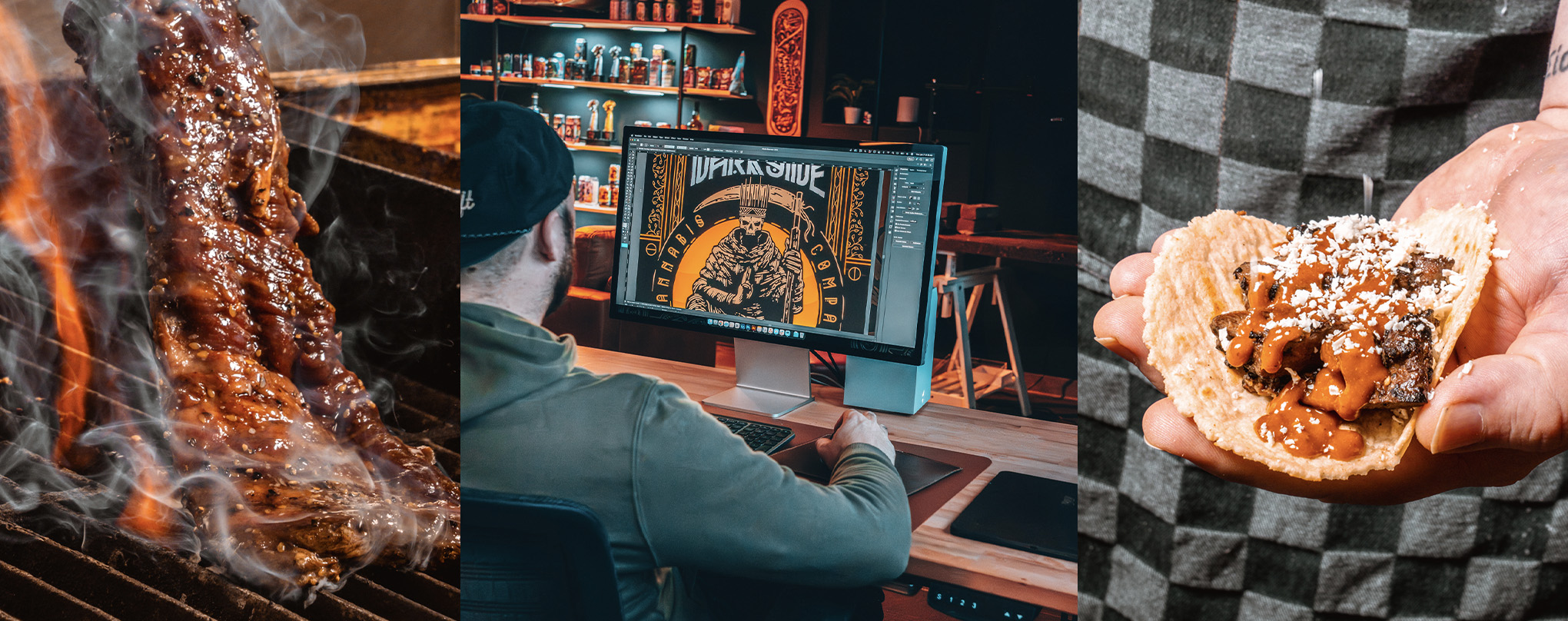
We’ve never wanted to feel like a giant corporate agency, but we also aren’t just a disconnected freelancer making one-off designs and disappearing. We operate more like a creative shop. Small team. Direct communication. Honest collaboration. No mystery around the process. Just fiercely creative work built to help brands stand out and actually connect with people.
Most of our relationships start small.
Maybe someone comes to us for packaging design or a logo system. Then later they need product photography. Then merch. Then a website refresh. Then launch graphics, social content, menus, signage, event materials, or ongoing creative support. Because we already understand the personality of the brand and the audience it’s speaking to, we can hit the ground running without restarting the relationship every single time a new project comes up.
That long-term consistency matters more than people realize.
Some of the best examples of that approach are brands like State Line Distillery, Karben4 Brewing, and Young Blood Beer Co.. Those relationships grew far beyond one deliverable. Over time the work evolved into photography, campaigns, merch, websites, product launches, social assets, taproom visuals, and helping shape the entire feeling around the brand itself.
That’s where the best creativity usually comes from.
Not random disconnected projects, but momentum built over time.
Honestly, there’s no universal answer.
If you need one quick deliverable and have a clear direction already, a freelancer may be perfect for you. If you’re a large company managing multiple departments, stakeholders, and national campaigns, a larger agency structure might make sense. But if you’re a growing brand looking for ongoing creative support, direct collaboration, and someone who understands your culture beyond just making things “look cool,” you may need something in the middle.
That’s at least the kind of shop we’re trying to build here.
We want good creative content to feel accessible. We want brands to feel like they have a go-to creative partner they can grow with over time. Someone they can come back to whether they need a full packaging system or just a quick event flyer. We do the big stuff and the small stuff. Because good branding is not just about making something look cool. It’s about building a world people actually want to be part of.